AI-Powered Inventory and Supply Chain Automation: What's Actually Possible
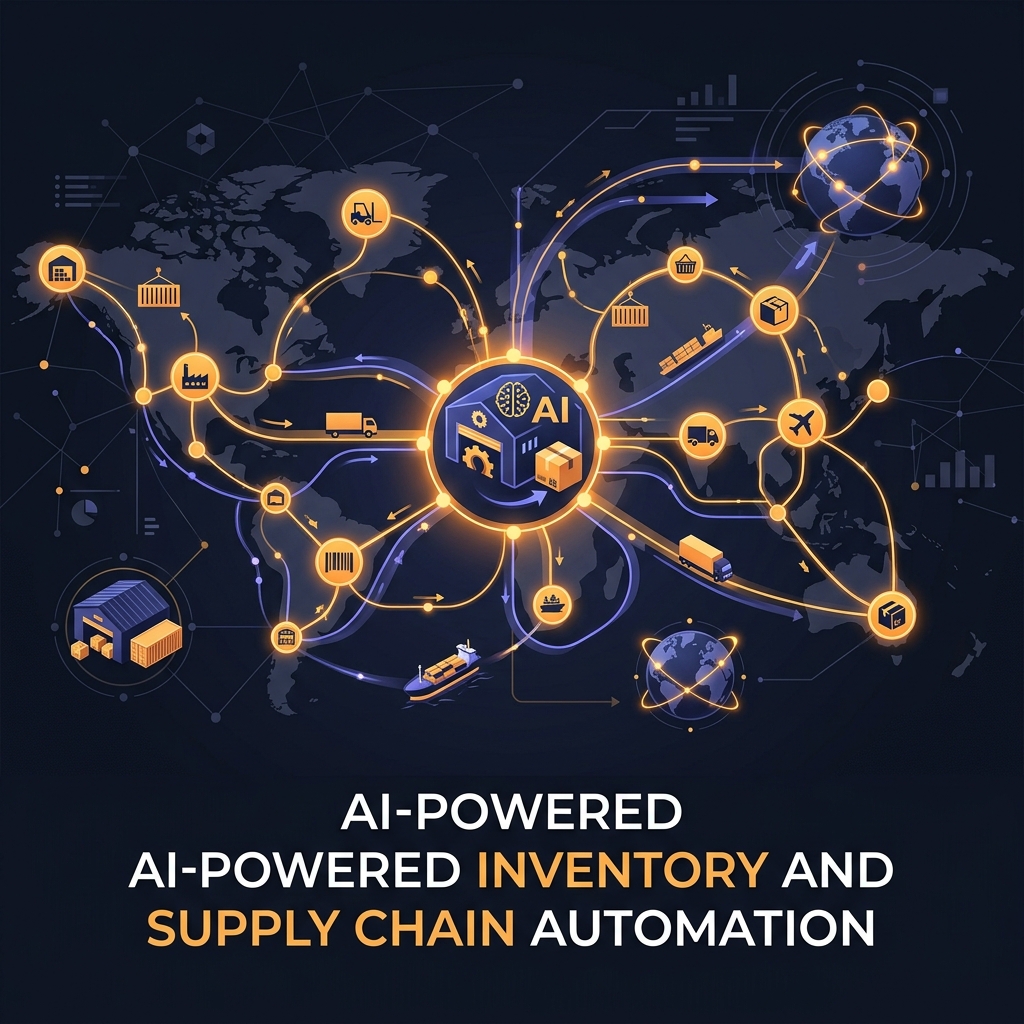
Inventory and supply chain management is one of the highest-cost, highest-complexity areas in any product-based business. AI does not replace the judgement required to run it well — but it eliminates the manual, repetitive work that consumes your team's time and introduces costly errors.
What AI Can Realistically Do in Supply Chain Today
Let's be direct: AI is not a magic supply chain brain that runs everything autonomously. What it can do, right now, in a real business environment, is eliminate specific manual tasks and improve decision-making speed. Here is what is production-ready today:
- Automated reorder triggering: When stock falls below a dynamic threshold (adjusted for seasonality and lead times), AI raises a purchase order draft automatically.
- Demand signal extraction: AI reads incoming orders, customer inquiries, and historical patterns to forecast short-term demand more accurately than manual review.
- Supplier email parsing: AI reads supplier acknowledgement emails, extracts delivery dates, quantities, and item codes, and updates your ERP without manual data entry.
- Purchase order matching: AI cross-references received goods against open POs, flags discrepancies, and routes exceptions for human review.
- Supplier performance monitoring: AI tracks on-time delivery rates, invoice accuracy, and quality flags across your supplier base — generating reports automatically.
The Highest-ROI Starting Point: Purchase Order Automation
For most manufacturing and distribution businesses, the fastest return comes from automating the purchase order cycle. This involves four steps that currently require manual action:
- Monitoring stock levels against reorder points.
- Creating and sending the PO to the supplier.
- Tracking the supplier acknowledgement and updating ERP.
- Matching the goods receipt to the original PO.
Each step can be automated with the right integration between your ERP, email system, and an orchestration layer like n8n. The result: your procurement team handles exceptions — not routine transactions.
Demand Forecasting with AI
Traditional demand forecasting uses historical averages. AI-enhanced forecasting also reads external signals: seasonal patterns, open order pipelines, customer contract renewals, and even raw material supply signals from your suppliers' communications. The difference in forecast accuracy is material — typically 15–30% reduction in forecast error — which directly reduces both stockouts and excess inventory carrying costs.
A 10% reduction in inventory carrying costs for a business holding $2M of stock saves $200,000 per year. Demand forecasting accuracy is often the single biggest lever for that improvement.
Supplier Communication Automation
Procurement teams spend hours every week chasing suppliers for delivery confirmations, reading acknowledgement emails, and manually updating delivery schedules. AI handles all of this:
- Reads supplier emails and extracts ETAs, quantities, and item references.
- Updates ERP delivery schedule records automatically.
- Sends automated chase emails when supplier confirmation is overdue.
- Escalates to a human buyer only when a supplier flags a problem that requires negotiation.
Integration Architecture for Inventory AI
A typical Leaner Studio inventory automation stack connects:
- ERPNext or Odoo as the inventory and PO source of truth.
- n8n as the workflow orchestration layer — monitoring stock levels, triggering actions, routing notifications.
- GPT-4o or Claude for email parsing, document extraction, and exception summarisation.
- Gmail API or Microsoft Graph for reading and sending supplier communications.
- Supabase for logging all automation actions, decisions, and override history.
What AI Cannot Do Yet in Supply Chain
Honest perspective: AI cannot yet reliably replace human judgement for supplier relationship management, strategic sourcing decisions, contract negotiation, or demand planning that involves major business pivots. These require context, relationships, and strategic thinking that goes beyond pattern recognition. Use AI to free your procurement team from administrative load — so they can focus on the high-value decisions only humans can make.
Calculate Your Inventory Automation ROI
Estimate how much time and cost your procurement and operations team could recover by automating the PO cycle and supplier communication workflows.
Calculate Automation ROIWant to Automate Your Procurement Workflows?
We build custom ERP-connected AI workflows for inventory-heavy businesses — from reorder automation to supplier communication pipelines. Let's scope your project.
Book a Free Workflow Audit